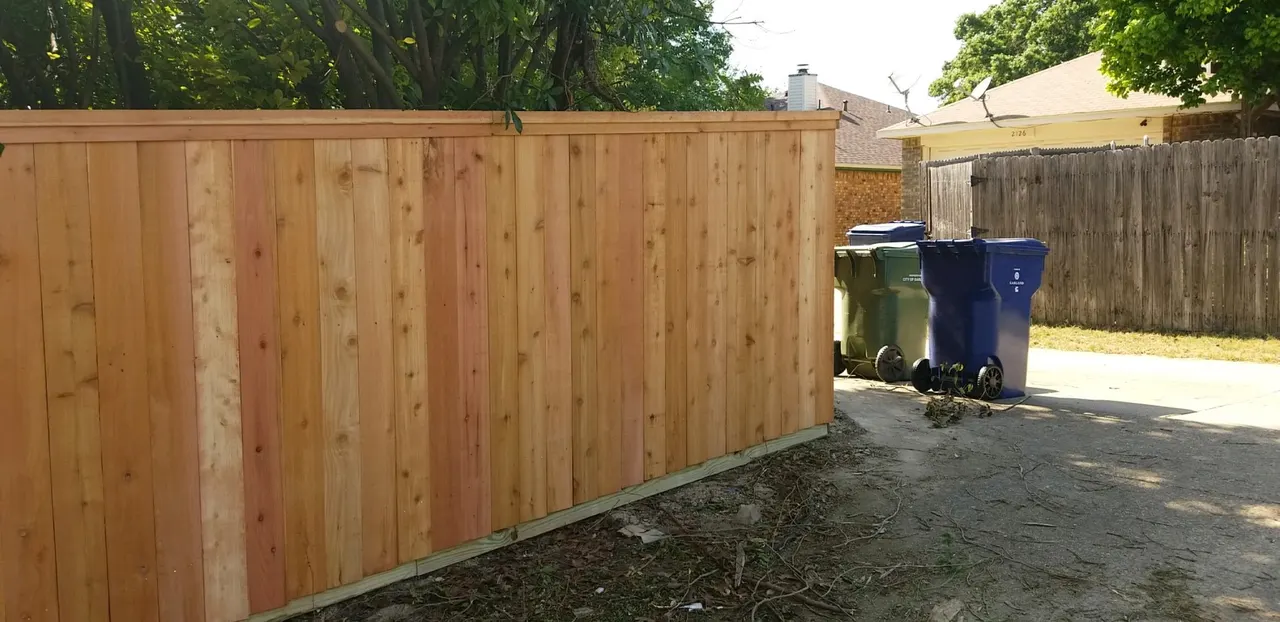
Seasonal Weather Impacts on DFW Cedar Fences
| Weather Element | What It Does to Wood | How to Prevent Damage |
|---|---|---|
| Intense UV Rays & Heat | Dries out wood fibers, causing grey fading, shrinking, and surface cracking. | Apply a deep-penetrating, oil-based UV-inhibiting stain. |
| Spring Hail & Heavy Rain | Pellets strip stain finish; standing moisture leads to mold, mildew, and rot. | Ensure 2-3 inches of ground clearance and re-seal every 3-5 years. |
| High Winds & Shifting Soil | Expands heavy DFW clay soil, causing shallow fence posts to shift or lean. | Anchor posts deep in concrete footings below the moisture line. |
1. Apply a High-Quality, Oil-Based Stain
Raw cedar naturally resists decay, but it cannot withstand relentless sun without help.
- Skip Water-Based Paints: Latex paint traps moisture inside the wood, leading to peeling and rot in the Texas heat.
- Choose Oil-Based Penetrating Stains: Oil-based stains soak deep into the wood grain, conditioning the cedar while repelling water and reflecting damaging UV rays.
- Re-Stain Timeline: Plan to re-stain your fence every 3 to 5 years to keep the cedar hydrated and protected.
2. Maintain Proper Ground Clearance
Rot almost always starts at the bottom of the fence. When cedar pickets sit directly in North Texas clay soil or wet mulch, moisture wicks upward into the boards.
- Keep pickets trimmed 2 to 3 inches above the ground level.
- Clear away fallen leaves, grass clippings, and garden mulch piling up against the fence base.
3. Inspect and Repair After Spring Hail Storms
Hailstones act like tiny hammers on wooden pickets, chipping away stain and splintering dry wood fibers.
- Check for Surface Fractures: After a severe DFW hail storm, inspect your pickets for micro-cracks where rain can seep in.
- Tighten Loose Hardware: High winds vibrate fence rails and gates, loosening screws and brackets. Tighten any sagging hardware before wind tears boards free.
- Touch-Up Damaged Spots: Spot-treat bruised wood with a light coat of stain to re-seal exposed fibers.
4. Secure Your Fence Against Wind Shifts
Straight-line winds easily pull down fences anchored in shallow holes. Ensuring your fence posts are set deep into concrete footings keeps the entire structure rigid, preventing wind gusts from getting underneath and lifting panels.
Keep Your Fence Looking New for Decades
A little proactive maintenance goes a long way in protecting your Western Red Cedar investment. Whether your fence needs a post-storm repair, professional staining, or a full replacement built to withstand Texas weather, North Texas Fence and Deck has you covered.
Call North Texas Fence and Deck at (972) 586-2442 or fill out our Service Request Form to schedule your cedar fence consultation or maintenance estimate today!
